Four upgrades are worth asking about when you replace a shingle roof: Class 4 impact resistant shingles, algae-resistant shingles, cool-color shingles and synthetic underlayment. None of them are required. Each one fixes a specific problem, so it helps to know which problem your house actually has.
Class 4 impact-resistant shingles
"Class 4" comes from a lab test called UL 2218. Testers drop steel balls on a shingle, and the class depends on the size of the ball. According to IBHS, Class 4 uses a 2-inch ball, and the shingle passes if no crack shows on the back after two hits in the same spot.
The Insurance Institute for Business & Home Safety also ran hail tests of its own, using lab-made hail instead of steel balls. Its summary of that testing found that, fresh out of the bundle, both impact-rated and standard shingles gave good protection against hail of 1.5 inches or smaller. The difference showed up at 2 inches. All of the impact-rated shingles that scored Good or Excellent at that size were made with polymer-modified asphalt.
As for price, the same IBHS survey across seven U.S. markets found Good and Excellent performers cost 9% more per roofing square on average than standard shingles. Prices swung a lot by region, so get the number for your own roof.
Then call your insurance agent before you pick a shingle. Some insurers give a discount for an impact-rated roof. Ask whether yours does, what paperwork they want, and whether the shingle needs a particular rating to count.
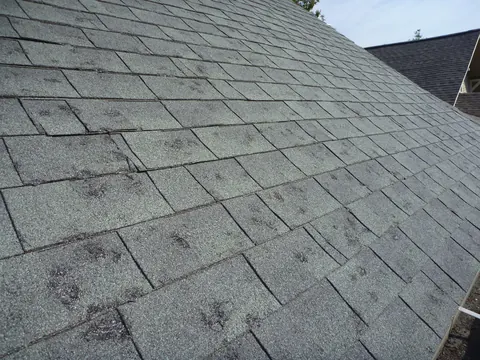
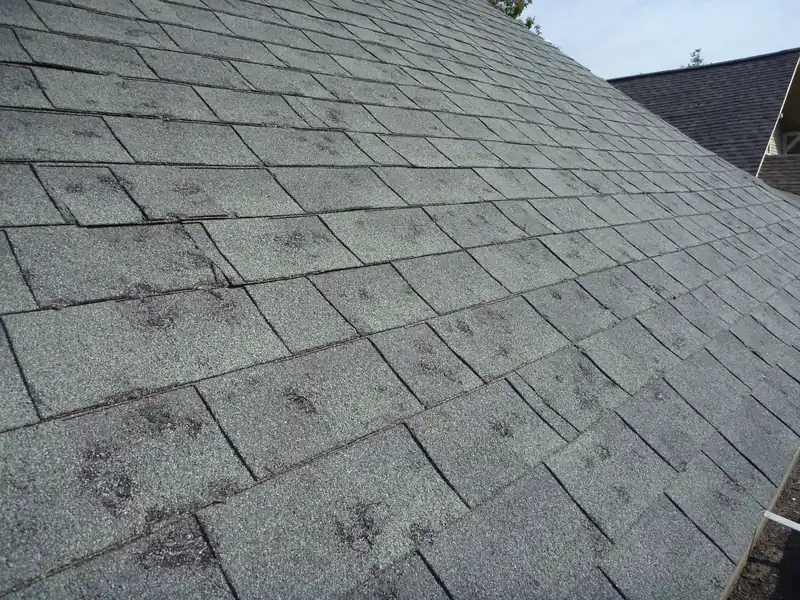
Our opinion: if you add only one upgrade, make it this one, and ask for a shingle IBHS rated Good or Excellent rather than settling for a Class 4 label alone. A roof that rides out a big hailstorm can spare you a claim and a deductible. Our post on hail damage in East Tennessee shows what a storm does to a standard roof.
Algae-resistant shingles
The black streaks running down shaded roofs around Knoxville are usually algae, not dirt. They grow where a roof stays damp and gets little sun, which is why north slopes under big trees get them first. Algae-resistant shingles have granules treated to slow that growth.
They won't make a roof last longer. They keep it looking clean longer, which matters if you might sell in a few years or you're tired of looking at stripes from the street. On a house under heavy shade, ask for them. On an open lot with full sun, they matter less.
Cool-color shingles
Cool-color shingles use granules that reflect more of the sun's heat than standard granules in the same color. The roof surface runs cooler on a July afternoon, and the attic underneath picks up less heat.
How much cooler depends on the color and the product, and the honest numbers live on the maker's spec sheet. Ask for the solar reflectance figure for the exact color you like, and compare it with the standard version of that shingle. If you're still deciding between light and dark, read light or dark shingles first.
Synthetic underlayment
This one isn't a shingle, but it sits under the shingles on any roof and it's an easy upgrade. Felt underlayment is heavy paper soaked in asphalt. Synthetic is a woven sheet that's lighter, lies flatter and handles a pop-up rain shower better if the deck is open for a while before the shingles go on.
It tends to be a smaller line on a quote than the shingle upgrades. Ask which kind your quote includes, and if it's felt, ask what synthetic would add.
How to ask for them
When you get a price, ask for each upgrade as a separate line with its own number. That way you see what Class 4 costs on your roof, not on an average roof somewhere else. The roof replacement page walks through the rest of a replacement, and the products page shows the shingle makers we work with.
Questions
Do Class 4 shingles look different?
Usually not from the street. Ask to see the color you want in both the impact-rated line and the standard one.
Will an impact-rated roof stop all hail damage?
No roof is hail-proof. A 2-inch steel ball in a lab is not the same as a storm, which is why IBHS tests with lab-made hail and publishes results by product.