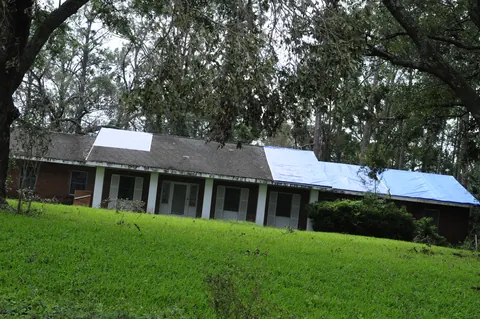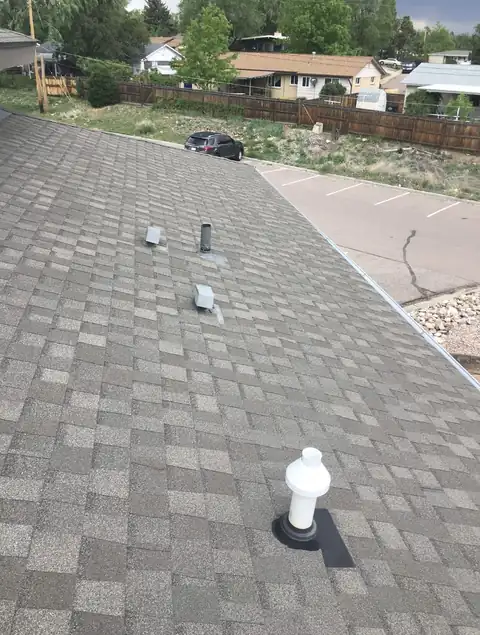
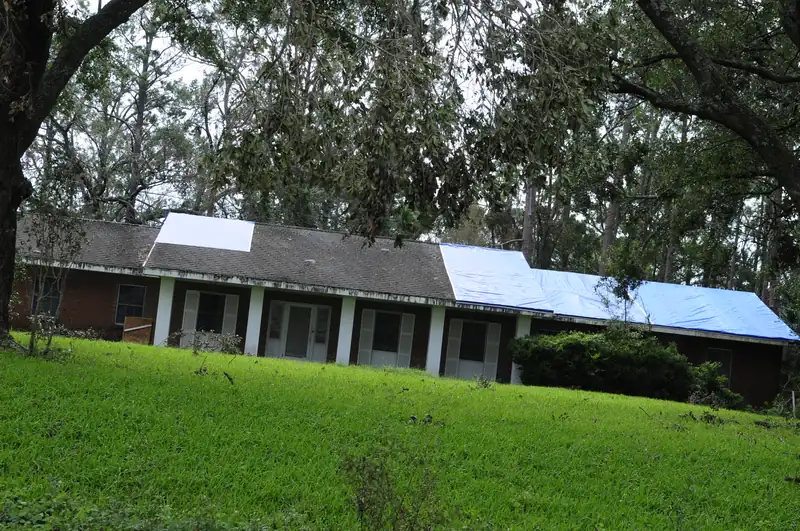
It's 2 a.m., the wind has finally dropped, and you felt the crack more than you heard it. You walk down the hall and there's an oak limb through the ceiling of the back bedroom, with rain coming in behind it. Here's what to do, in order, for the next hour.
First: get everyone out of that room
Close the door behind you. A ceiling that took a hit can keep coming down, and a trunk resting on the roof can shift when the wind picks back up. Nothing in that room is worth standing under. That goes for the dog too.
If someone was in the room when it came through, check them before anything else and call 911 if anyone's hurt. Everything else on this list can wait.
Then look outside for power lines
A tree that comes down in a storm can take a service line with it. Look from a window before you walk out. The National Weather Service's advice is short: do not go near downed power lines, and report them to the police (National Weather Service). We'd treat any line touching the tree or the gutters as live. Call the power company as well.
If water is coming through the ceiling near a light fixture, shut off the breaker for that part of the house, as long as you can reach the panel without walking through water.
Call for help in the right order
Our opinion: the tree service goes first and the roofer second. Nobody can tarp a roof with a trunk lying on it, and cutting a loaded tree off a house is its own trade with its own equipment. A good tree crew takes it off in pieces so it doesn't drag across what's left of the shingles.
Then call a roofer to get a tarp on. Our line, (865) 830-8126, is answered 24 hours a day, and the emergency repair page has the details.
While you wait, slow the water down
- Put buckets and towels under the drips. Move furniture and electronics out of the wet room if you can do it without going under the damaged part of the ceiling.
- If the ceiling is bulging with water away from where the tree hit, a small hole at the lowest point lets it drain into a bucket instead of bringing the drywall down. Our post on what to do when your roof is leaking covers this step by step.
- Start drying out what you can reach. The EPA says water-damaged areas and items should be dried within 24 to 48 hours to prevent mold growth (EPA).
Stay off the roof. In the dark, with a tree on it, it's no place for anyone.
Take pictures before anything moves
Before the tree crew starts cutting, take photos and video from outside showing how the tree is lying on the house, from a few angles. Then go inside and shoot the ceiling, the wet floor and anything that's broken. Once the trunk is gone, the adjuster can't see how it landed, so this is your only chance to show it.
What insurance usually covers
According to the Insurance Information Institute, a standard homeowners policy covers damage to the house and its contents when a tree falls on it, and generally pays to remove the tree up to about $500 to $1,000. If a tree falls and misses the house, there's generally no coverage for hauling it off. If it was your neighbor's tree, your own policy still pays for your house, and your insurance company may try to collect from the neighbor's company afterward (Triple-I).
Your own policy is what counts, so read the declarations page or call your agent in the morning. Our notes on insurance cover what an adjuster usually wants to see from the roof side.
After the tarp is on
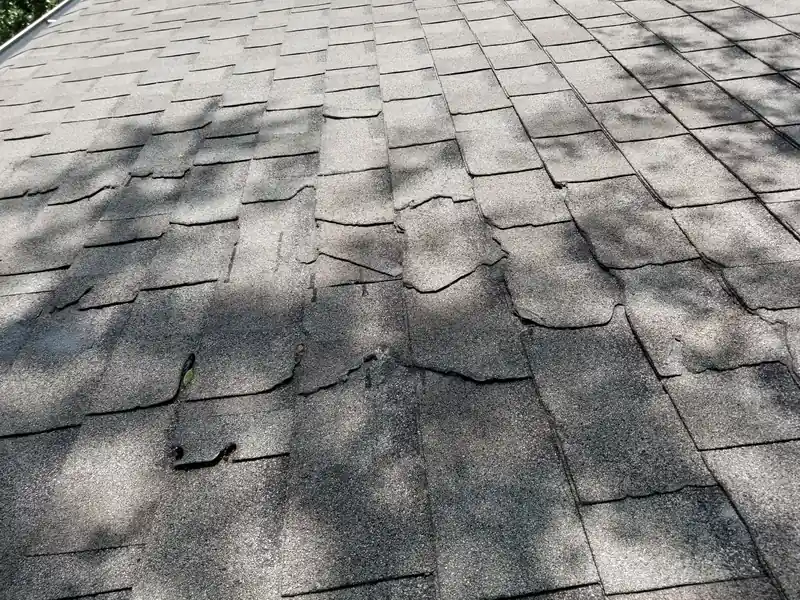
Once the tree is off and the hole is covered, the emergency part is over and you have time. Get the damage looked at in daylight, get a written price for the repair, and hold it next to what the adjuster writes up. Damage like this often reaches past the hole itself: cracked rafters, broken decking, and shingles torn loose where the limbs dragged.
If the deductible, or the gap between the price and the check, is more than you can cover at once, ask us about paying over time.